
March Merkin Results + Our Fishing
March Merkin Results + Our Fishing
A quick note about this report: I haven’t been updating the fishing reports regularly in a number of years, and while I used to obsessively document every day of fishing in and out of tournaments, I just don’t have the time anymore. If anyone still checks in on these, I thought it would be fun to do an old-style fishing report from Ian and me in last month’s March Merkin. Here goes:
Last month I wrapped up the 2026 March Merkin Permit Tournament. It was a wild, amazing ride. I hadn’t fished the event in four years, leaving the permit tournaments behind as Kat pursued them while I focused on the tarpon tournaments instead. In that four year period, lots has happened: Kat found for herself the success she sought, winning both the March Merkin with Doug Kilpatrick and the Del Brown with Nick Labadie. Ian Slater and I found the success we were after in the tarpon tournaments, winning the Gold Cup two years ago. My approach changed, fishing almost exclusively for tarpon and permit fishing only with 4-pound tippet for a few days a year, still chasing the elusive 24-pound world record that I’ve been orbiting around for nearly a decade without yet touching. The permit fishing also changed, in ways that made me feel like our past success was far away from the time being, and I was happy to watch the new group of guides and anglers make their own stories in the tournaments that I no longer participated in.
There seemed to be a way to it all that made sense, and while Kat moved on from tournament fishing Ian and I never considered stepping back into the permit stuff until this year, when an opportunity arose. Two of my close friends Steve Huff and Carl Hiaasen, were fishing the tournament. I talked with Kat about it and decided that it would be fun to step back in to the tournament that had always been clearly the top of the permit tournament trifecta. Ian agreed, and with that we took a temporary spot.
We set out to do some preparation leading up to it, and while we hooked a few fish we were throwing 4 pound and never landed one. Going in to the tournament, I hadn’t caught a permit in the Keys since early September, when I fished with John O’Hearn and Tim Mahaffey.
Day One (prefish day)
Ian and I started early after the time change, and it was clear that Ian had been doing his homework. We were in a zone with many fish of the kind we were after, though we were plagued by random other fish that we hooked also–sometimes when we threw at a permit, but also at times when we were simply clearing our line and getting re-stacked. Throughout the day we caught a toad fish, a bar jack, yellow tails, a gray snapper and a lane snapper. We also learned a few things: there were permit around, but they were going to be difficult. For all the fish Ian found us we were unable to coax more than a single bite from a lone fish, and despite landing it easily we felt like we were on the wrong side of a pile of work that needed to be done. We left for the kick off, and after getting that out of the way we went our separate ways–me to freshen up some leaders and Ian to tie a few flies we thought might work.
Day Two (first tournament day)
Ian and I left with the rest of the field, making our way to the zone that we’d been finding fish. We found them again, a great sign, but immediately had trouble feeding them–a disturbing portend. We worked as hard as we could, discussing each shot, and after a few hours of being told no we finally found a yes in the afternoon. At 1:30 we hooked and landed a fish, which gave us a few ideas of things to try on the next shots, but despite our efforts we were not able to do anything more than that by the time the clock ran out. We ran back to the dock and checked in, finding that our single fish was only one of a large number caught that day: Chandler Williams and Justin Sexton caught two, and there were six teams other than us that had one. Ours was the smallest of those, so entering day two we were both uncomfortable to be in 7th but grateful to have something on the board. Ian tied some more flies that evening, and we discussed our strategy for the following day.
Day Three (second tournament day)
The second tournament day was similar to the first, but there were some key differences. We ran to the zone we’d been fishing, and settled in to trying to figure out what it would take to get the shots to work. This day we were closer to figuring it out, and that Ian had us continuously in the fish caused both hope and despair–if we were could sort out the answer of what to do, we’d have plenty of things to do it to. If not, we were in for a lot of disappointment. A few times, a fish would race over to the fly and appear to eat but we simply couldn’t get them to open up and do the deed. Slowly, we started trying different things and made some headway. In the early afternoon we caught one, which made us feel good, but what happened next was a low point for us. Two fish, two hours apart, came unbuttoned. It wasn’t that we’d done much different, it just seemed like things were not working out and the frustration built. At lines out I was both happy that we’d put another on the board, but annoyed that what we needed was outside of our reach thus far. At check in we realized that our averages so far had put us in a tough spot. Two of the teams that had scored fish the day prior had caught more on the second day, and three of them sat on top of the leaderboard: Greg Dini and David Mangum had another two for a total of 215 cm, Chandler Williams and Justin Sexton had caught another for a total of 204 cm, and Nick Labadie and Lex Kaplan had added another 3 (!) to their fish from day one for a total of 199 cm. We sat below this group of three, leading the rest of the pack with a total of 99 cm but at least 3 fish away from making a play for P1. The simple reality, with one day left? The winner was almost certainly going to come from the three boats at the top of the field, full stop. Of the boats that had little chance we were positioned the highest by score, though there was nothing to do about the math of it all except try hard and not pay attention to how grim our possibilities were.
Day Four (final tournament day)
The last day of fishing started out like the prior few, with a run to where we were fishing. The first couple hours were far from what we hoped for. Fish were around, but we struggled to see them in the low light and had a few shots that were foiled by a bad attitude from fish that already knew we were there. We kept on, and as the light got higher in the later morning we were able to try some new angles of attack. What we were trying worked a little after 11 AM, and we put a first fish on the board. This was crucial. We had time to catch what we needed, and having one on the board earlier than the last two days meant there were more remaining hours to get something done. An hour later, a single fish lined up the fly and I set the hook, but the fish shook its head and tore away, unattached. On a day when things absolutely needed to break our way, losing one felt like an insurmountable piece of bad luck. We fished on, working hard to not make any mistakes. At 1:15 we had a chance to try our honed approach, and it worked as it was supposed to. In a few minutes we had our second fish in the net, and after a quick measurement for scoring went back to it.
Looking back at the day now, things took their sharp turn for the best after our second fish. We knew we absolutely needed to catch the next one to have any mathematical chance of pulling off the tournament, so what was the beginning of something special felt like pressure: if we couldn’t get another, we weren’t even going to be in the running for the podium. I think that the knowledge of how down we were herded us toward the success we ended up having, and when we got another bite a little less than an hour later the line wrapped around my hand and nearly cost us the fish. I had to untangle a wrap around my hand before the fish figured out it was hooked, and I did so with only ten inches of line to spare before the fish hit the reel and went racing off–a moment of luck that we needed to keep our momentum up. We poled this one down, and by 1:50 had our third in the boat. Remember: three is the minimum we needed to push the other teams to catch one, not at all what was required to win. In our mind it was sure that they would get at least one, and all this so-far-epic day of fishing did was put us on top of a past leaderboard that was undoubtedly going to be growing higher throughout the day. We knew that we had more work to do, and we set out to do it. Our next fish came in no time at all, a few minutes before 2:30, and with that we had four. This is also when we lost track of how many we had so far, and had to check. I counted back the catch times from my phone photos to Ian, who counted the four. With that, we worked on our fifth. A half-hour later we had our fifth, putting us in strong contention. We were in the place that we aspire to as a team: effective, easy going, and lethal. All I can say is that it felt easy and uncomplicated, just doing a job well and everything working as it should. At 4:00 Ian idled us back around to the other side of the flat, and we had a half-hour until lines out. I looked at my watch when we got there, and it was 4:06. Ian turned the boat for a shot as I was stripping out my line, and by 4:07 we were tight to another fish. We landed it at 4:11. Ian jumped back up on the platform and kept poling, and I got stripped out again. It was 4:20 by the time it felt like we were fishing properly again, and when Ian saw a fish tail 100 yards away I honestly kind of figured we wouldn’t make it there in time. It was 4:25. By 4:28 Ian slowed the boat down, turned the bow, and I had one shot at a small group of fish. One spiked hard on the fly, and we were tight to number 7. Ian chased after the fish, and within a minute our lines out alarm was going on. No matter, since you’re allowed to fight a fish after lines out as long as you hook it before 4:30. At 4:34, we had our seventh in the net.
I’ve had some remarkable moments on the water in my life. Tournaments, world records, and things that I just feel incredibly grateful for. I’ve learned that taking a picture of the people involved is a great move. There’s something about the afterglow that’s written into the moment and comes across in a photo that’s not staged, and as soon as the fish hit the net I pulled out my phone and asked Ian to look at me. More than the pictures we have of the fish, or the trophy, this is the picture that I think sums up the moment more than any other:
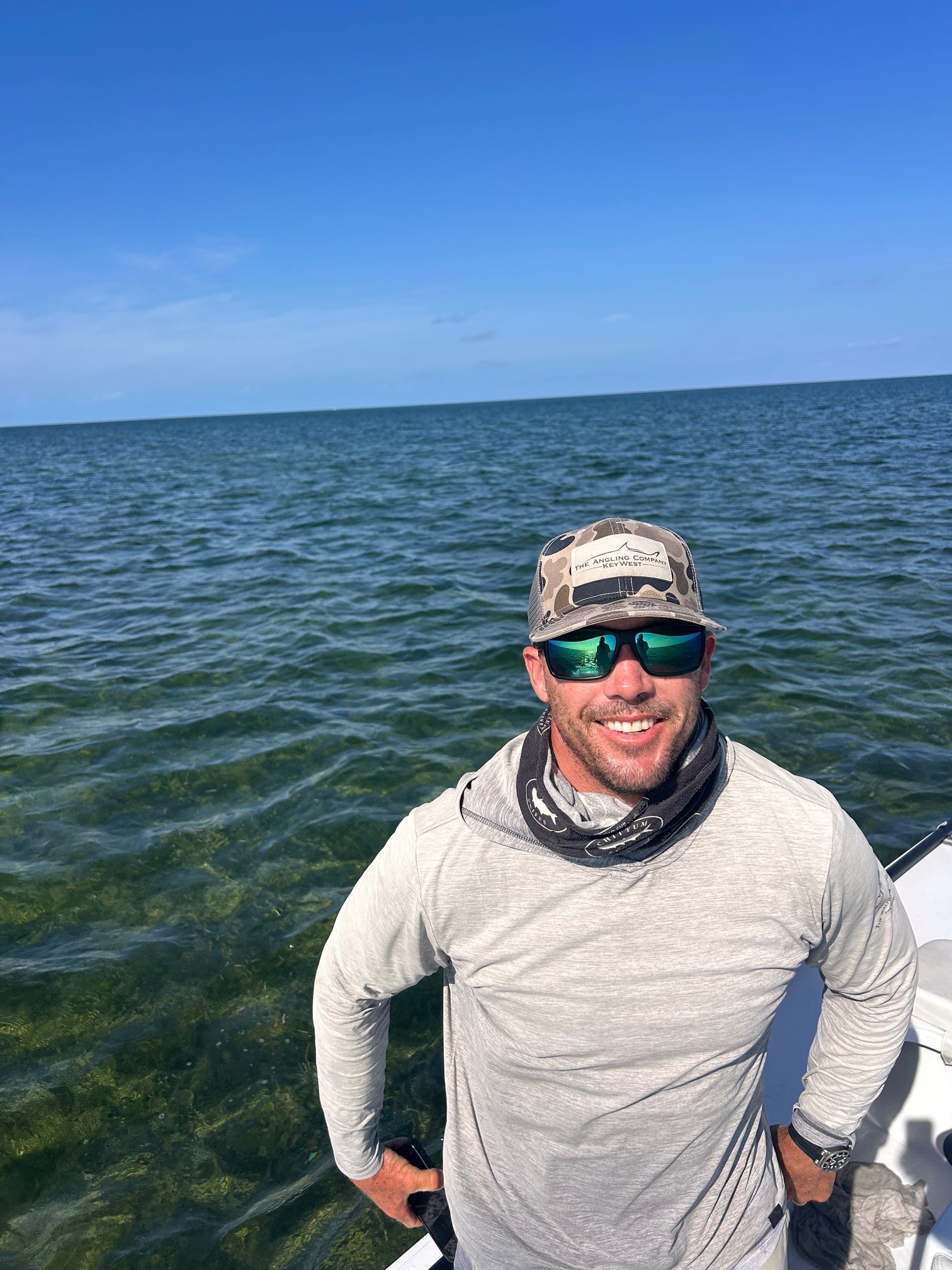
After that, everything got a whole lot more complicated. We ran back to the dock, me convinced that it wasn’t going to be enough to win and Ian discussing whether we should have our families come to the awards, both of us still not sure what to do. The fact is that I’m built more for a taking a punch than delivering a knockout, and I’ve always been more comfortable being cold than lighting the village on fire. As such, the experience was unfamiliar. I wish I could say that I knew what I was in the middle of and was stoked, but instead I was nervous and a little queasy throughout our run home. Kat had volunteered to do the score keeping this year, and she and I texted some as we were on our way. When we got into the dock we had the surreal experience of adding another line to the score sheet each team carries for the day, which is printed to handle a maximum of six fish. Ian and I walked up to the scoring table and checked in, finding there that of the three leading teams only one had checked in already–Greg Dini and David Mangum had caught a fourth and final fish. So far there was no word from Nick Labadie and Lex Kaplan or Chandler Williams and Justin Sexton. We just handed in our score, watched as the photos were verified, and then started taking stuff out of the boat. I finally believed we’d pulled it off when Kat texted me as I was putting my boat bag in the back of the car, and it started to sink in that we’d won.
In retrospect, we had won the tournament at precisely 1:58 PM, with our third fish. It would have actually been a tie on total centimeters with Greg and David, and would have then gone to the time of the last fish caught first. They caught theirs after ours, so not only did the next four fish not matter at all but they may have prevented a dramatic flourish that as far as I know has not yet occurred in a permit tournament.
I did give a speech, which is somewhat out of character, and in it I hoped to sum up a few things about the March Merkin and what it means to me. When I first moved to Key West, with a pocket full of Adderall and a deep insecurity embedded in my head, this tournament was the biggest on the scene down here. It represented a time of year when things were maximally difficult, and under the most pressure. I have clear recollections of talking to some friends of mine about what Scott Collins and Greg Smith were doing as they seemed to win the tournament at will, and when John O’Hearn and I lost to them in 2014 it was one of the most difficult things I’d been through in the sport that I had committed my whole life to. What John and I were able to accomplish later with our tournament record in the Merkin was meaningful because of what we’d seen other people do and what the tournament meant to us. I will forever be grateful to John for dealing with all of the extra difficulty and pressure we created for ourselves, and our run in the permit tournaments was the first time I was able to feel like I had restored some self respect. And this leads me right into my current status, as a member of a team with Captain Ian Slater.
Ian is, simply, a towering talent and great human being. While John may have carried me over a longer distance, Ian has carried me to new and higher places than I’d ever been. From being hyper-competitive in the tarpon tournaments and winning the Gold Cup, which has been a lifelong dream of mine, to now posting the scoring record in the March Merkin and highest one-day total for any permit tournament, I feel privileged to be on his boat. There’s an inevitability to fishing with Ian, and it feels at times like my only contribution to our success is recognizing that he was going to be a champion and getting on his boat and waiting for it to happen. I have no doubt that he would be on the top of whatever mountain he was climbing, and I consider him to be one of the people in this world I look up to most.
Between winning this particular tournament, with this particular person, in this particular way, at this particular time of my life, I have nothing left to say but that it was perfect.
I’m retiring (again) from the permit tournaments, and I can’t wait to watch the March Merkin continue to define the highest level of competition in this sport. If you ever want to know who the guys are that are working the hardest and complaining the least, focusing on themselves and their own abilities instead of complaining about things to draw attention away from their own inadequacy, look to the March Merkin. I know I will be.
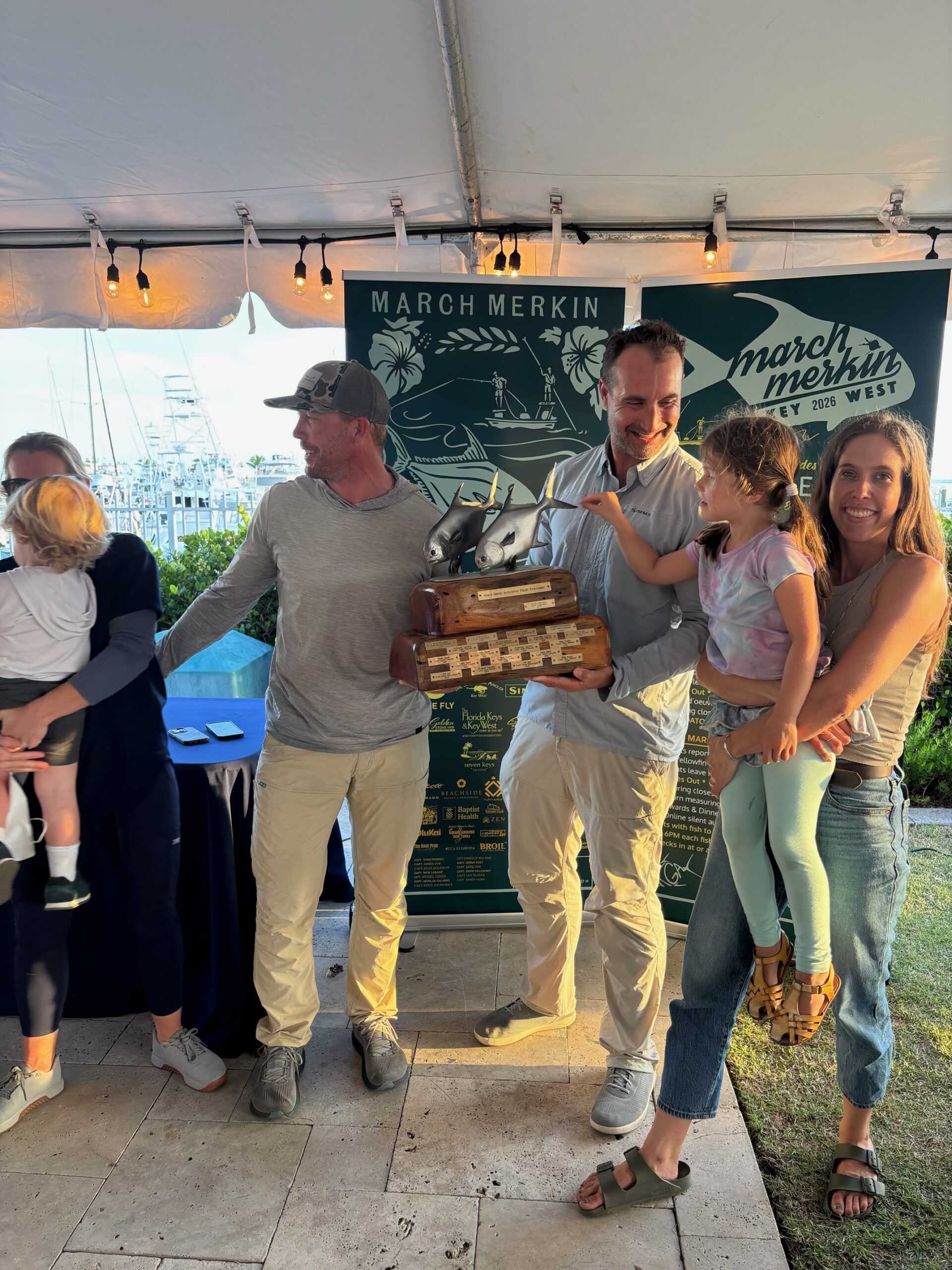
I’m deep in preparation for the Gold Cup, though Ian and I threw some four pound at permit earlier this week and caught one. Here’s hoping that after tarpon season, we’re able to get that 25-pounder we’ve got our sights on. I have no doubt that we can.
More to come,
Nathaniel

